Dance Break: Building your dance identity
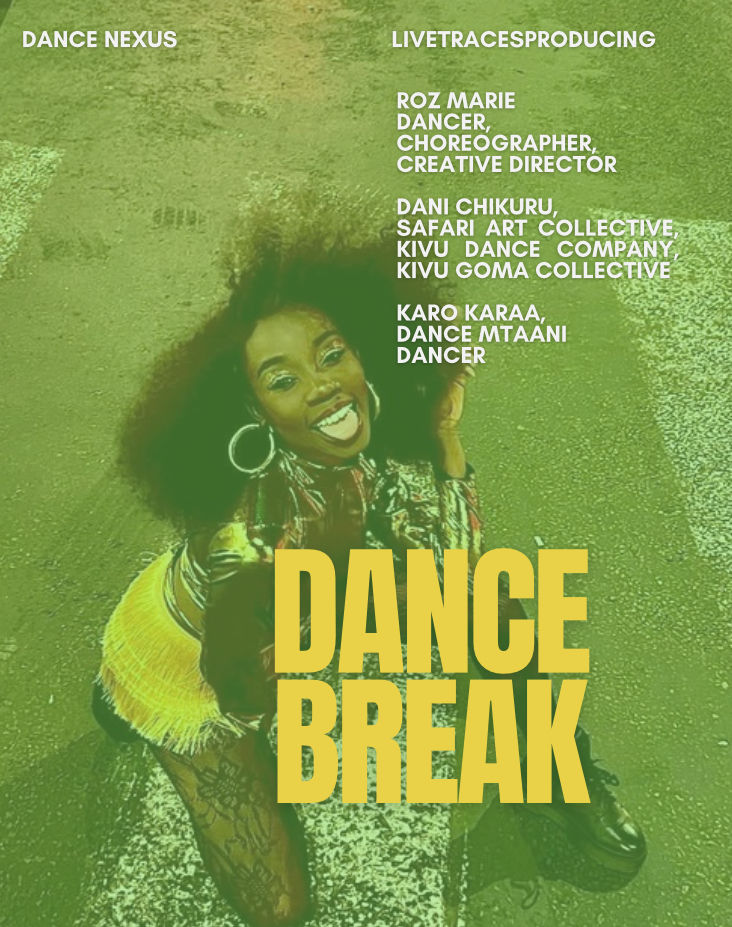
Dance in East Africa is predominantly characterised by self-training. When the infrastructure to grow in dance relies on you, the movements of your individual human body; the pressure and demands can be high. The same is true for the Festival makers who in turn, by trial and error, create spaces that respect and listen to the artist/ dance maker. As Roz Marie powerfully says we need to become our own ‘service providers’ which applies to the festival maker, dancer, choreographer alike. Prompted by a desire to practically consider the role and reality of dance in East Africa from the perspective of dancers themselves - the below interviews summarises practical tips to help dancers thrive - not just survive while prioritising individual creative value and wellbeing.
The following are three spotlight interviews with the Skillz Dance Fest community dancers to share about their experience, highlights and motivations for the future of Dance in East Africa.
Dance Nexus & Live Traces Producing
Interview with Roz Marie
Can you tell us about your new Thursday Night Dance Take Over at Wild Ones and how they are going?
The dance night take over at the wild ones is literally WILD…. You have pro and non pro Dancers coming into this sacred space that allows for raw expression and connection without judgment .
Currently it’s exciting.. … we are excited for the future ….every new week is a fulfilling different experience for everyone that comes to dance .
What is your dance inspiration and what got you started?
My dance inspiration was and is honestly me 😂😂😂😂
Becoz I wanted to experience and express myself in different unique ways ,forms and styles ….. so when I imagined myself in “those” ( thought patterns) in different ways, this inspired me to get started to DANCE coz I wanted to manifest those thoughts into movement….
What do you find most unique about being a leader in the dance industry?
The most unique thing about being a leader in the dance industry-especially here in Uganda--is that the stage is never just a stage; it's a living parliament of bodies, cultures, and untold stories. So it’s always a privilege to be able to connect and share space with others and inspire , mentor , learn more about myself though others while boosting each other up to become better dance artists so that we all raise the standard of professionalism in the performing arts sector .
What advice would you give to young dancers starting out.
Let them ACTUALLY LISTEN TO THEIR BODIES.. that’s their higher power guiding them towards whatever they truly want to accomplish
- you are limitless beings , therefore it means whatever you want to do , you can absolutely do.
What are your hopes and aspirations for the future of dance in Africa?
I hope dance artists will be able to support each other as a CONCRETE COLLECTIVE and support each other on all levels and avoid divisions because it’s only a collective effort that can shift the narrative to higher levels influence.
We need to become our own service providers, becoz no one can tell our stories better than ourselves, so initiatives like dance media , dance spaces , dance clubs, more dance events , among other things ….. I encourage dance artists to look into these gaps and fill them up so that there is a cohesive atmosphere for the industry.
Roz Marie
Dancer, Choreographer and currently hosting Dance Takeovers, Thursdays @The Wild Ones
Interview with Karo Karaa
On Breaking..
I believe that Breaking is more than a dance style — it’s a declaration of identity, discipline, and possibility. In East Africa, where creativity is often overshadowed by the pressure to “get a stable job,” breaking creates a new space where young people can be brave, expressive, and unapologetically themselves.
Breaking forces you to commit.
It makes you build mental resilience.
It humbles you before it elevates you.
East Africa has always had raw talent — but breaking gives that talent structure. It becomes a bridge between passion and opportunity. You see young dancers developing discipline, teamwork, competitiveness, global awareness, and cultural pride… all through a movement style born from struggle, expression, and rebellion.
And there’s something beautiful about watching East African breakers carve out a presence on African and even global stages. It shows the world that the continent doesn’t just consume culture — it contributes to it, shapes it, innovates it.
I do believe that Breaking here is not just a hobby.
It’s a statement.
It’s a way out.
It’s a new language for an entire generation.
Do you think dance can be a professional career for young people in Kenya and Uganda
Yes it is
yes I do believe that it can be 💯 ... But only if it is given the same seriousness as other famous and mainstream careers such as engineering, medicine , law, architecture etc.
Both countries have stuff like commercials, choreography classes, festivals, TV competition, corporate events , NGOs that fund creative elements, international competitions etc..all these are income streams...
So what tends to be missed is professional structure and not raw talent.. Dancers here are gifted and the industry keeps growing ...
I have seen dancers who pay their rent and daily necessities from gigs, they travel the world , they teach kids, have classes are in celebrities videos, become culture icons.. so of course it can be a professional career all that matters is that the dancers hone their craft, always be diligent and have the hunger of an athlete and the discipline of an entrepreneur.
Karo Karaa, (Dance Mtaani Kenya)
Practical Tips for Dancers Finding Your Balance
Hone Your Craft – Local/Global
1.Train as if you are competing globally and not just within your neighbourhood- hone your craft, practice and never stop.
2. Don't rush to 'blow up' build your foundation on the style you are trying to perfect even if it's more than one. The dancers who last are the ones who build slow, steady and strong.
3. Learn the business side- learn how to price yourself, learn how to write contracts , to network acquire skills that can improve your dance art style because survival is they key to business in dance.
Cultivate Your Self Worth
4. Document your journey - from all your failures your wins, this is your portfolio .
5. Collaborate- learn to exchange with your fellow dances, get to learn every one has something to give do not compete out of ego..your biggest opportunities come from those that to grow with.
6. Allow yourself to be uncomfortable - get out of your comfort zone, compete, travel if you can, see how different countries tend to train or practice the same style you do, learn new styles etc
Reflect on what makes Dancing Meaningful to you
7. Dance because it sets your soul on fire and not just to gain fame... When you have passion even when everything or things become bleak it remains and everything else will tend to follow..
Karo Karaa, Dance Mtaani Kenya
Dani Chikuru,
Safari Art Collective, Kivu Dance Company, Kivu Goma Collective
What does participation in Skills Dance Fest mean to you?
For me, participating in Skills Dance Fest is an honour and a responsibility. It’s not just a competition — it’s a place where different cultures, styles, and stories meet on one stage. Being there pushes me to grow, to share my energy, and to represent my roots with pride. It means showing the world what we, as African dancers, can bring: creativity, discipline, and a unique rhythm that comes from our culture and our struggles.
Afrobreak Ghana is coming up – tell us about it.
AfroBreak Ghana is one of the biggest platforms celebrating African breaking and street culture. Dancers from across the continent meet to battle, learn, exchange, and elevate the level of breaking in Africa. It’s more than an event — it’s a movement.
For me, going there means carrying my country, the RDC, on my shoulders, representing the East African scene, and proving that our talent deserves to stand on any international stage. AfroBreak is where new champions are made, and where the African breaking community becomes stronger.
What do you think dancers and festival leaders can do to support growing dance in East Africa?
To grow dance in East Africa, dancers and festival leaders must work together.Dancers should train seriously, support each other, share knowledge, and stay united instead of competing negatively.Festival leaders need to create more platforms, more workshops, and opportunities for young dancers to perform and learn.
We also need collaborations across countries — Congo, Uganda, Kenya, Tanzania, Rwanda — so we can build one strong East African dance community.
If we invest in the culture, the culture will grow.


Comments